Teeth Grinding (Bruxism): Causes, Night Guards and Treatment
This page is general information and does not replace an examination.
Teeth grinding (bruxism) is repeated clenching or grinding of the teeth, or bracing of the jaw, during sleep or while awake[3]. It is often linked to stress or anxiety[1] and can cause jaw pain, headaches, worn or broken teeth and sensitivity[1]. A night guard does not stop grinding, but it protects the teeth and dental work[1][6]. At Ulubey Dental Clinic in Antalya a hard night guard is made in the clinic for €80 (included with veneers) and can be ready within 2–3 hours when it is urgent. Crown, bridge and veneer guarantees exclude fracture due to bruxism (teeth grinding); patients who grind their teeth must wear the night guard we provide.
- 1. What is bruxism?
- 2. How common is teeth grinding?
- 3. Signs and symptoms
- 4. Causes and risk factors
- 5. How grinding is diagnosed
- 6. What you can do yourself
- 7. Night guards: what they do and do not do
- 8. Grinding, crowns, veneers and implants
- 9. Other treatments, including botulinum toxin
- 10. How we manage grinding at our clinic
- 11. Frequently asked questions
- 12. Sources
What is bruxism?
An international group of experts defined bruxism in 2013 as repetitive jaw-muscle activity characterised by clenching or grinding of the teeth and/or by bracing or thrusting of the lower jaw. It has two forms: sleep bruxism, during sleep, and awake bruxism, during the day[3].
A 2018 update of that consensus added an important point: in otherwise healthy people, bruxism should not be seen as a disorder but as a behaviour that can be a risk factor for some problems, such as tooth damage or jaw pain[4]. In other words, grinding matters when it causes harm, and treatment aims at the harm and the triggers, not at a number on a test.
Cleveland Clinic notes that sleep grinding can cause more harm than daytime grinding because you do not realise it is happening, while awake bruxism may not need treatment if you can become aware of it and reduce stress[2].
How common is teeth grinding?
A systematic review of adult studies found awake bruxism reported by 22.1% to 31% of people, and frequent sleep bruxism by 12.8% ± 3.1%. Grinding was not related to sex and was less common in elderly people[5].
These figures come with a warning from the authors themselves: almost all studies relied on people’s own reports, often from one or two questions, so the numbers should be read with caution[5]. Many people who grind in their sleep do not know it until a partner hears it or a dentist sees the wear.
Signs and symptoms
Besides grinding and clenching, the NHS lists[1]:
- A painful jaw, which can lead to temporomandibular disorder (TMD).
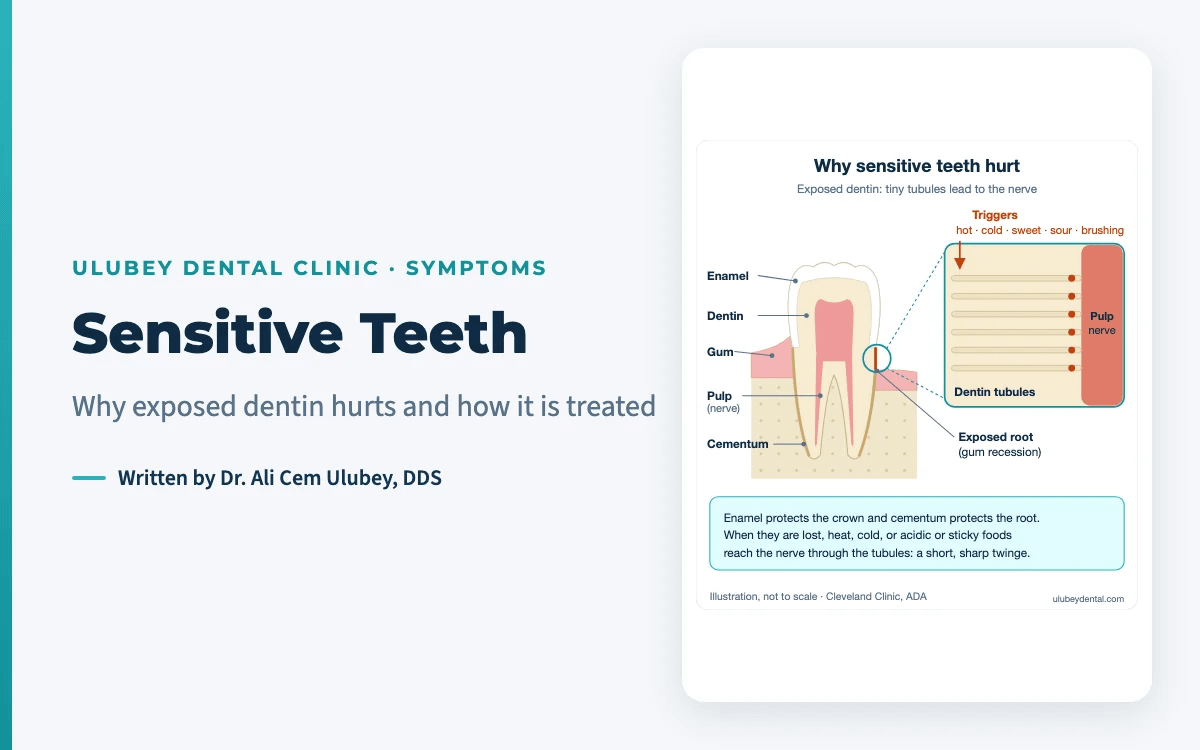
- Worn-down or broken teeth, which can cause sensitivity and the loss of teeth and fillings.
- Headaches and earache.
- Disturbed sleep.
Cleveland Clinic adds facial pain or headaches especially in the morning, sore jaw muscles, pain when eating and difficulty opening and closing the mouth[2].
| What you notice | Who to see |
|---|---|
| You grind your teeth and have tooth damage or sensitive teeth[1] | A dentist |
| You grind and have pain in your jaw, face or ear[1] | A dentist |
| Your partner says you grind your teeth in your sleep[1] | A dentist |
| You are worried about your child grinding their teeth[1] | A dentist |
| You need help with causes such as stress, anxiety, smoking, alcohol or drugs[1] | A GP or family doctor |
| Snoring or pauses in breathing at night[1][2] | A doctor; sleep problems such as sleep apnoea are linked to grinding |
Based on the NHS teeth grinding page [1] and Cleveland Clinic [2]. This table does not diagnose.
Causes and risk factors
It is not always clear why people grind. The NHS names stress and anxiety as the most common cause, and also lists sleep problems such as snoring and sleep apnoea, some medicines for sleep problems, depression or anxiety, smoking, and drinking a lot of alcohol or caffeine[1]. Cleveland Clinic notes a confirmed link between sleep apnoea and grinding, although it is unclear which causes which[2].
If you started grinding after starting a new medicine, do not stop it on your own; talk to the doctor who prescribed it.
How grinding is diagnosed
Dentists usually diagnose bruxism from your symptoms and a physical examination[2]. A sleep study (polysomnography) may be needed in some cases[2]. The 2018 consensus recognises both self-report and instrument-based assessment, and advises against simple yes-or-no cut-offs in otherwise healthy people[4].
At our clinic the diagnosis is clinical: we look at the teeth, existing crowns and fillings, the jaw muscles and the jaw joint, and we take a panoramic X-ray.
What you can do yourself
The NHS suggests[1]:
- Find ways to relax, such as breathing exercises, listening to music and regular exercise.
- Improve your sleep: go to bed at the same time every night, relax before bed, and keep the bedroom dark and quiet.
- For jaw pain or swelling, an ice pack wrapped in a tea towel for 20 to 30 minutes; over-the-counter pain relief as directed on the package, if your doctor or pharmacist has not told you otherwise.
- Do not smoke, and do not drink too much alcohol or caffeine.
- Do not chew gum or eat hard foods if your teeth or jaw hurt.
- Have regular dental check-ups.
For daytime clenching, simply noticing it helps: many people find their teeth are pressed together while concentrating[2].
Night guards: what they do and do not do
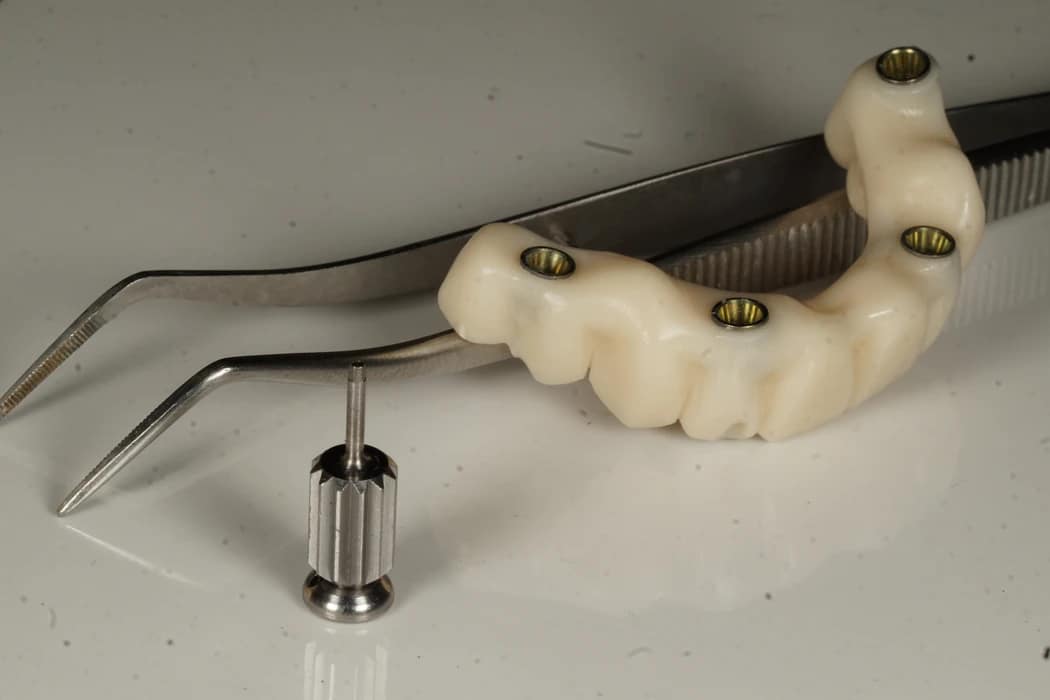
A night guard (also called a mouth guard, occlusal splint or bite splint) is a custom-made appliance worn over the upper or lower teeth at night. The NHS says it protects your teeth from damage[1].
It is important to be clear about what the evidence shows. A Cochrane review concluded that there is not sufficient evidence that an occlusal splint is effective for treating sleep bruxism itself, but that there may be some benefit with regard to tooth wear[6]. A later systematic review found no trials that measured tooth wear in people with bruxism, so whether splints reduce wear is still not proven[7]. In practice, a guard does not stop you grinding; it puts a replaceable layer between your teeth, your fillings, crowns or veneers and the forces of grinding.
| Details | |
|---|---|
| Type | Hard night guard, custom-made in the clinic |
| When it is worn | At night, during sleep |
| How quickly | Can be ready within 2–3 hours when it is urgent |
| Price | €80 on its own; included in the price of veneers |
| Needed for guarantees | Yes, for patients who grind their teeth and have crowns, bridges or veneers |
Ulubey Dental Clinic, October 2026. Night guard price as listed on our dental treatment prices page.
- Included: the custom hard night guard, made in the clinic and fitted.
- No fee: the consultation and the panoramic X-ray.
- Included with veneers: veneer patients receive their night guard without a separate charge.
Prices are indicative; your final written quote follows the examination and X-rays and is valid for 30 days. Unless the treatment plan changes, the written price does not change.
Grinding, crowns, veneers and implants
Grinding can wear down or break teeth and cause the loss of fillings[1], and the same forces act on crowns, bridges and veneers. That is why our guarantees treat grinding the same way everywhere: 10-year fracture guarantee on Amann Girrbach zirconia crowns and bridges made at our partner lab; 5-year clinic guarantee on crowns and bridges in other materials; crown and bridge guarantees exclude fracture due to bruxism (teeth grinding), and patients who grind their teeth must wear the night guard we provide. All guarantees are conditional on attending recommended check-ups and cover the prosthesis, not the root canal or filling beneath it. The 5-year guarantee on E.max veneers against fracture or debonding likewise excludes trauma and bruxism without a night guard. Full terms are in our written dental guarantee.
If you are planning crowns, a bridge, veneers or implants and you grind, tell us at the first visit. It is taken into account in the plan, and a night guard is needed from the day the final work is fitted. Our zirconia crowns page explains the crown options.
Other treatments, including botulinum toxin
A GP can help with stress, smoking, alcohol or drug use when these drive the grinding[1]. When grinding comes with jaw pain, our guide to TMJ and jaw pain explains self-care, jaw exercises and what the evidence supports.
Treatment options reported in the literature include occlusal splints, behavioural measures, and in selected cases injection of botulinum toxin into the masseter muscle, which is a prescription-only medicine and is decided case by case at an in-person examination. Cleveland Clinic notes that such injections relax the jaw muscles for a time and need repeating, usually every three to four months[2]. Our page on masseter botulinum toxin for teeth grinding sets out the evidence, who should not have it, and the side effects.
Botulinum toxin is a prescription-only medicine. Whether it is suitable for you can only be decided by a clinician at an in-person examination; this article is general information, not a treatment recommendation.
How we manage grinding at our clinic
Ulubey Dental Clinic is run by two dentists, Dr. Ali Cem Ulubey and Dr. Surur Ulubey; there are no rotating dentists. For grinding:
- Examination first: teeth, fillings, crowns, jaw muscles and jaw joint, with a panoramic X-ray.
- Night guard: hard, made in the clinic, €80 on its own and included with veneers; ready within 2–3 hours when urgent, which suits visitors on a short stay.
- Jaw pain: jaw exercises are explained in the clinic; advanced jaw-joint cases are referred to physiotherapy.
- Protecting new work: grinding is taken into account in every crown, bridge, veneer and implant plan.
Frequently asked questions
What causes teeth grinding?
It is not always clear. The NHS names stress and anxiety as the most common cause and also lists sleep problems such as snoring and sleep apnoea, some medicines for sleep problems, depression or anxiety, smoking, and drinking a lot of alcohol or caffeine. Several factors often act together, so treatment looks at the triggers as well as the teeth.
Does a night guard stop teeth grinding?
No. A night guard protects your teeth and dental work from the forces of grinding, but a Cochrane review found insufficient evidence that splints treat sleep bruxism itself. That is why we combine the guard with attention to the triggers, such as stress, sleep and caffeine, and with regular checks of the teeth and the guard.
How much is a night guard in Antalya?
At Ulubey Dental Clinic a hard, custom-made night guard is €80 on its own and is included in the price of veneers. It is made in the clinic and can be ready within 2–3 hours when it is urgent. The consultation and panoramic X-ray carry no fee, and your written quote is valid for 30 days.
Do I need a night guard after crowns or veneers?
If you grind your teeth, yes. Our crown, bridge and veneer guarantees exclude fracture caused by grinding, and patients who grind must wear the night guard we provide. Grinding can chip ceramic and loosen veneers, so the guard protects the new work. Tell us at the first visit if you know or suspect that you grind.
How common is bruxism?
In a systematic review of adult studies, awake bruxism was reported by 22% to 31% of people and frequent sleep bruxism by about 13%. Most studies relied on self-report, so the figures are uncertain, and many people who grind in their sleep do not know it. Grinding was less common in elderly people and was not linked to sex.
Can teeth grinding cause jaw pain and headaches?
Yes. The NHS lists a painful jaw, which can lead to temporomandibular disorder, headaches and earache among the symptoms of grinding. Morning headaches and sore jaw muscles are typical of grinding at night. If jaw pain is your main problem, a dentist examines the jaw joint and muscles as well as the teeth.
Sources
- NHS. Teeth grinding (bruxism) (page last reviewed 8 April 2026; accessed 26 October 2026). www.nhs.uk/symptoms/teeth-grinding
- Cleveland Clinic. Bruxism (teeth grinding) (last updated 18 December 2023; accessed 26 October 2026). my.clevelandclinic.org/health/diseases/10955-teeth-grinding-bruxism
- Lobbezoo F, Ahlberg J, Glaros AG, et al. Bruxism defined and graded: an international consensus. J Oral Rehabil. 2013;40(1):2-4. PMID 23121262. pubmed.ncbi.nlm.nih.gov/23121262
- Lobbezoo F, Ahlberg J, Raphael KG, et al. International consensus on the assessment of bruxism: report of a work in progress. J Oral Rehabil. 2018;45(11):837-844. PMID 29926505. pubmed.ncbi.nlm.nih.gov/29926505
- Manfredini D, Winocur E, Guarda-Nardini L, Paesani D, Lobbezoo F. Epidemiology of bruxism in adults: a systematic review of the literature. J Orofac Pain. 2013;27(2):99-110. PMID 23630682. pubmed.ncbi.nlm.nih.gov/23630682
- Macedo CR, Silva AB, Machado MA, Saconato H, Prado GF. Occlusal splints for treating sleep bruxism (tooth grinding). Cochrane Database Syst Rev. 2007;(4):CD005514. PMID 17943862. pubmed.ncbi.nlm.nih.gov/17943862
- Riley P, Glenny AM, Worthington HV, et al. Oral splints for temporomandibular disorder or bruxism: a systematic review. Br Dent J. 2020;228(3):191-197. PMID 32060462. pubmed.ncbi.nlm.nih.gov/32060462
This page is general information and does not replace an examination.
Editor contact: [email protected] · ulubeydental.com/contact-us