
Is Dental Tourism in Turkey Safe? An Honest 2026 Doctor’s Guide
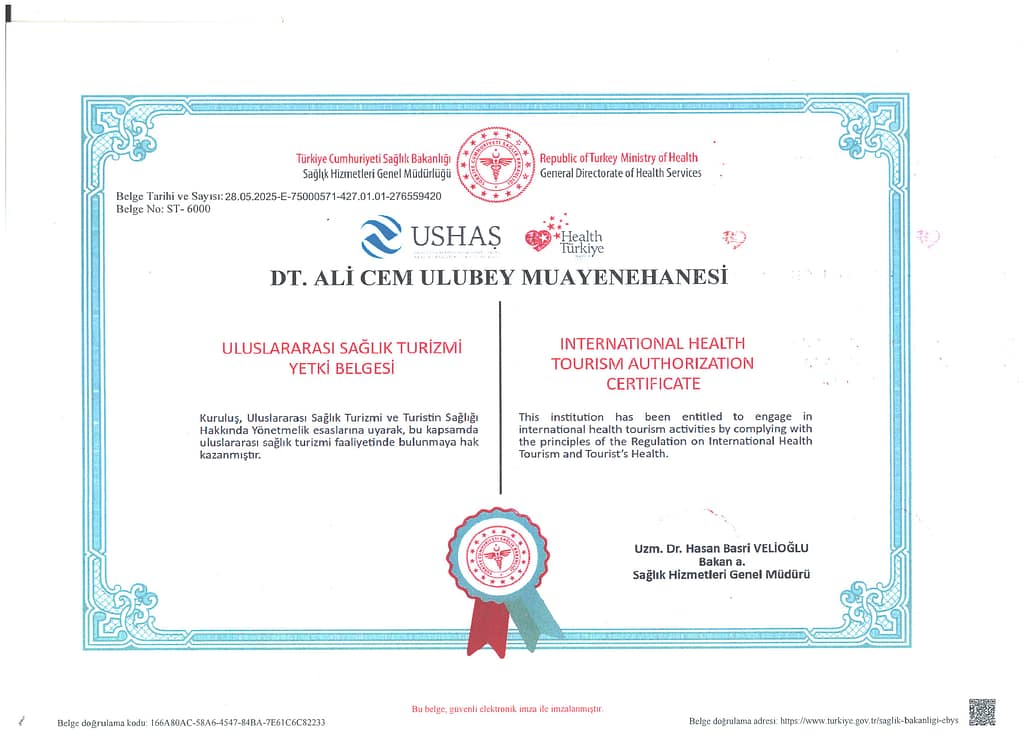
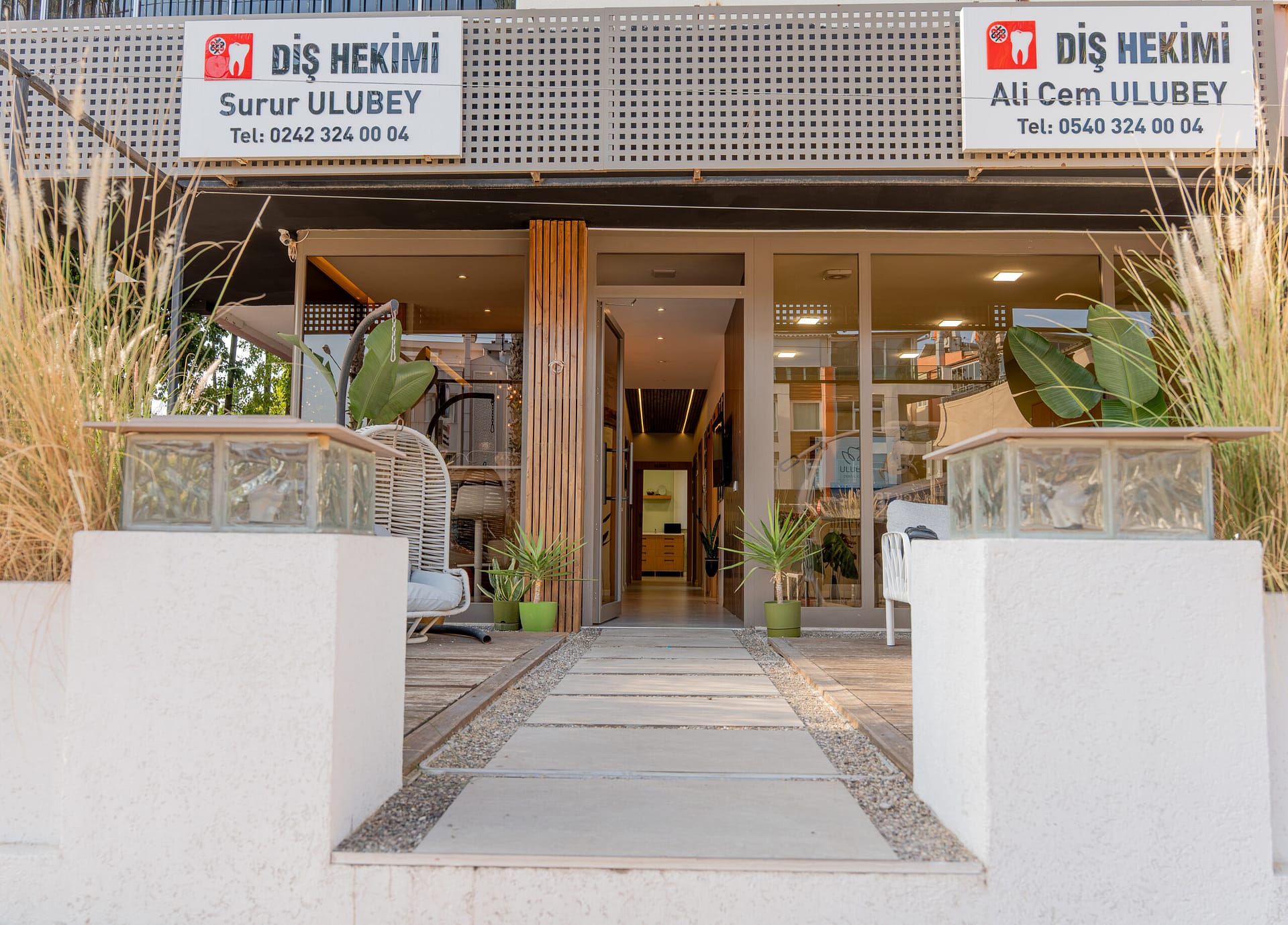
Quick answer: Dental tourism in Turkey can be safe if you choose a licensed clinic and know exactly who will treat you. Ulubey Dental Clinic in Muratpaşa, Antalya, holds Ministry of Health health-tourism authorisation ST-6000, is listed on HealthTürkiye and is a member of the Turkish Dental Association (TDB). Two named dentists, Dr. Ali Cem Ulubey, DDS and Dr. Surur Ulubey, DDS, treat every patient personally, and instruments are sterilised in a registered Class B autoclave that logs every cycle. No deposit is required for treatment; you pay at the clinic.
Is dental tourism in Turkey safe? The direct, professional answer is: dental care in Turkey can be safe—but safety is determined by the specific clinic and dentist you select, not the country as a whole.
Turkey has become a popular destination for dental treatment because of advanced digital workflows, university-trained dentists, and published prices well below UK and European private fees (see our sourced price comparison). However, sensationalized media reports regarding the “Turkey Teeth” phenomenon and aggressive high-volume clinics have made international patients rightfully cautious.
As licensed dental practitioners operating a boutique husband-and-wife clinic in Antalya, we believe patients deserve clinical truth rather than marketing spin. Below is your complete 2026 safety verification framework: how to distinguish reputable dental surgeries from commercial factories, legal authorisation checks, and material authenticity protocols.
Verify Real In-Clinic Costs with Zero Hidden Fees:
Calculate your customized treatment investment before booking flights:
👉 Antalya Dental Treatment Prices 2026 Directory |
👉 Full Mouth Implants Cost Calculator (All-on-4 / All-on-6)
Is it safe to get dental implants or veneers in Turkey?
Dental implants
Dental implants in Turkey can be safe when a named, licensed dentist plans the case from X-rays, uses a recognised implant system and gives you the records afterwards. At Ulubey Dental Clinic in Antalya, every patient receives an English-language implant passport with the original label of each implant (brand, size, LOT number), so any dentist at home can identify the parts. Healing takes about 3 months, planned individually, before the final crown. See dental implants in Antalya and the implant passport and the systems we use.
Veneers
Veneers in Turkey can be safe if healthy teeth are not ground down for crowns marketed as veneers, the problem behind “Turkey teeth”. Ask for a tooth-by-tooth written plan that names the material and says how much enamel will be removed. At Ulubey Dental Clinic, the smile is designed digitally first, and E.max veneers carry a 5-year guarantee against fracture or debonding, conditional on check-ups. See veneers in Antalya and Turkey teeth: the honest truth.
Independent guidance for anyone planning treatment abroad: UK General Dental Council, Going abroad for dental treatment; NHS, Treatment abroad checklist; GOV.UK Travel Aware, Surgery abroad; TravelHealthPro, Medical tourism; Oral Health Foundation, Dental tourism; US CDC, Medical tourism.
1. Dental Factory vs. Boutique Clinic: The Structural Divide
The primary safety risk in Turkish dental tourism stems from commercial business models. In high-volume “dental factories,” clinical decisions are frequently driven by sales coordinators aiming to maximize chair turnover:
| Safety & Operational Factor | High-Volume “Dental Factories” | Boutique Doctor Practice (Ulubey Dental) |
|---|---|---|
| Primary Contact & Planning | Commissioned call-center sales reps | Direct clinical dialogue with treating dentists |
| Doctor Continuity | Different dentists per shift/stage | Same dentist from consultation to final review |
| Enamel Conservation | Full-crown preparation removes about 63–72% of the coronal tooth structure, vs about 3–30% for veneer preparations (Edelhoff & Sorensen, J Prosthet Dent 2002;87(5):503–9) | Biomimetic 0.3–0.5mm micro-prep enamel bonding |
| Implant Healing Timeline | Promised “Permanent teeth in 3 days” | Biological 2-visit protocol (about 3 months of healing, planned individually) |
| Material Traceability | Generic or unverified implant clones | Original barcode serial stickers in Implant Passport |
2. The “Turkey Teeth” Reality: Crowns Marketed as Veneers
The vast majority of horror stories seen on UK television or social media involve young patients who requested “veneers” but received full dental crowns.
True porcelain laminate veneers require ultra-conservative micro-preparation: removing only 0.3mm to 0.5mm of outer enamel, preserving 100% of the tooth pulp and structural vitality. In contrast, full crown preparation shaves 60% to 70% of healthy tooth structure down to tiny pegs, leading to pulpal necrosis, severe sensitivity, and root canals.
At Ulubey Dental Clinic, we follow strict biomimetic guidelines. If your teeth are healthy and aligned, we will never cut them down for crowns. We utilize Dentsply Sirona Primescan digital smile mock-ups and genuine Ivoclar IPS e.max press ceramic to preserve natural tooth structure.
3. Legal Verification: Republic of Turkey Ministry of Health (ST-6000)
To protect international patients, the Republic of Turkey enforces strict clinical regulations. In Turkey, it is illegal for a dental facility to treat international patients without an official International Health Tourism Authorization Certificate granted by the Ministry of Health.
Ulubey Dental Clinic holds the Ministry of Health International Health Tourism Authorisation Certificate No. ST-6000 and is inspected by the Ministry of Health under the health-tourism authorisation requirements. Sterilisation uses a registered Class B autoclave that logs every cycle. Our listing on the official portal: HealthTürkiye Official Registry.
How to check any Turkish clinic is authorised — 3 steps
- Open the Ministry list. Go to the HealthTürkiye list of authorised health-tourism providers of the Turkish Ministry of Health.
- Search the legal name. Clinics are listed under their legal name, which can differ from the brand. Ours is “Dt. Ali Cem Ulubey Muayenehanesi”, authorisation no. ST-6000 (our listing).
- Match the dentist. Ask the clinic for the full name of the dentist who will treat you, and check that the same name appears on your written treatment plan and invoice.
4. The 10-Point Patient Safety Checklist Before Traveling
Before transferring a deposit or booking flights to Turkey, ask any prospective clinic these 10 mandatory questions:
- Who is my actual dentist? Demand the full name, university degree, and diploma registration number of your treating dentist.
- Is the quote itemized and in writing? Avoid “from £X” marketing. Ensure your quote specifies implant count, abutment type, and bridge material line-by-line.
- Veneers or crowns? Ask explicitly: “How many millimeters of enamel will be removed from my teeth?” (True veneers = 0.3–0.5mm).
- Will I receive original barcode passports? Confirm you will receive peel-off manufacturer serial stickers for every titanium implant placed.
- What is the implant healing protocol? If a clinic promises permanent zirconia bridges in 3 to 5 days, walk away. Bone osseointegration takes about 3 months, planned individually.
- Is flight safety monitored? Review our clinical guidelines on flying after dental implants to avoid in-flight barotrauma.
- Which intraoral scanner is used? Ensure digital 3D scans (such as Dentsply Sirona Primescan) are used rather than gag-inducing manual trays.
- Which brand of zirconia is milled? Ensure certified medical brands like Amann Girrbach (Austria) are specified in writing.
- How is aftercare handled? Verify whether remote video consultations via WhatsApp are provided after returning home.
- Is the clinic officially licensed for health tourism? Check for an official Ministry of Health authorization number.
Get an Honest Second Opinion on Your Case
Unsure about a quote you received from another clinic? Send your panoramic X-ray or smile photos to our clinical WhatsApp line. Dr. Ali Cem Ulubey personally provides an honest, non-sales review of your treatment suitability within 24 hours.
Message Dr. Ulubey on WhatsAppSpeak directly with our dentists in English, Turkish, Persian/Farsi or Azerbaijani.
Frequently Asked Questions
Is dental tourism in Turkey safe for international patients?
Dental tourism in Turkey can be safe when performed at clinics authorised by the Turkish Ministry of Health. Safety is determined by the individual clinic’s standards, genuine certified materials (such as Straumann, Nucleoss, Amann Girrbach), and dentist-led care rather than sales-driven high-volume clinics.
How can I verify if a dental clinic in Turkey is legally licensed?
Check whether the clinic holds an official International Health Tourism Authorization Certificate issued by the Republic of Turkey Ministry of Health. For example, Ulubey Dental Clinic holds certificate No. ST-6000, verifiable on the official government HealthTürkiye registry.
Why do some patients experience “Turkey Teeth” complications?
Complications occur primarily when commercial dental factories aggressively shave 60% to 70% of healthy tooth structure down to stumps to place cheap full crowns marketed as “veneers”. At Ulubey Dental, we follow conservative biomimetic dentistry: preserving tooth pulp with minimal 0.3–0.5mm micro-prep E.max veneers.
Is it safe to get full mouth dental implants in Turkey in one trip?
No. Osseointegration takes about 3 months (planned individually; about 6 months on average with bone grafting or an open sinus lift), so the bridge fitted in the first days is a fixed temporary. The permanent monolithic zirconia bridge is made at the second visit, after healing; we do not fit a definitive bridge before the implants have integrated. Safe protocols require two visits: Visit 1 for implant placement and temporary teeth, and Visit 2 for final monolithic zirconia bridges after bone fusion.
How do I know if my dental implants in Turkey are genuine?
Every reputable clinic must provide a signed and stamped Medical Implant Passport containing the peel-off serial numbers and sterile lot barcodes from the original manufacturer packaging (e.g., Straumann, Nucleoss, Neodent); the LOT and REF numbers identify the exact product, and for Straumann components a dentist can confirm originality with Straumann’s Online Verification Tool.
What happens if I experience a complication after returning home?
Reputable clinics maintain structured remote follow-up protocols. At Ulubey Dental Clinic, Dr. Ali Cem Ulubey and Dr. Surur Ulubey provide scheduled remote check-ins via WhatsApp at 30, 90, and 365 days, backed by the manufacturer’s own lifetime guarantee on the implant fixture and our clinic’s 5-year guarantee on crowns/bridges (10-year fracture guarantee if Amann Girrbach zirconia), conditional on attending check-ups.
Is it safe to get dental implants in Turkey?
It can be, when a named, licensed dentist plans your case from X-rays, uses a recognised implant system and gives you the records. At Ulubey Dental Clinic in Antalya you receive an English-language implant passport with the original label of each implant (brand, size, LOT number). Healing takes about 3 months, planned individually, before the final crown, so most cases need two visits.
Are veneers in Turkey safe?
They can be, if healthy teeth are not ground down for crowns marketed as veneers. Ask for a written, tooth-by-tooth plan that names the material and says how much enamel will be removed. At Ulubey Dental Clinic the smile is designed digitally first, and E.max veneers carry a 5-year guarantee against fracture or debonding, conditional on attending check-ups.
Related Guides & Verification Resources
💡 Explore our treatment cost calculators
4 interactive tools for implants, veneers, single implants, and zirconia crowns. Answer 5 questions, get personalized 2026 pricing in 60 seconds. No email required.
This article is for general patient education. The framework presented applies to evaluating any dental clinic, in any country. The author runs a dental clinic in Antalya and has a commercial interest in the topic; the framework is intended to be applicable regardless of which clinic a patient ultimately chooses. References: Turkish Ministry of Health regulations on dental tourism; Turkish Dental Association registration framework; published implant complication literature.
Editor contact: [email protected] · ulubeydental.com/contact-us