
Turkey Teeth: The Honest Truth (2026 Dentist’s Guide)
Turkey teeth — you’ve probably seen the phrase in a headline, on a reality TV recap, or on TikTok. It refers to the ultra-white, uniformly square, often oversized dental work that some patients bring back from Turkish cosmetic clinics — usually after aggressive crown preparation on healthy natural teeth.
The term is unfair to Turkey as a whole. Excellent dental work happens here every day, using the same materials and protocols as UK, German, and Swiss private clinics. But bad dental work also happens here — and it’s louder, more viral, and easier to spot from across the room. That’s how “Turkey teeth” became a shorthand.
This is the honest version of what the term means, why some patients end up with a mouth full of over-prepared crowns, and how to make sure you don’t become the next cautionary story. Written from the chair side by a dentist in Antalya who sees revision cases regularly.
What “Turkey teeth” actually means
In common usage, “Turkey teeth” describes cosmetic dental work that shows one or more of these traits:
- Over-white shade — brighter than any natural enamel, blindingly uniform in colour
- Uniformly square, oversized tooth shape — no natural variation between incisors and canines
- Aggressive tooth reduction — the natural tooth beneath the crown has been filed down to a small “peg” shape
- Crowns instead of veneers — because more tooth was removed than a veneer requires
- No digital smile design preview — patient didn’t see the plan before treatment
- 16–20 units done in a rush — sometimes in as little as 3–4 days without proper try-in
None of these are inherent to Turkey. They are choices made by specific clinics, usually driven by a marketing model built on speed and volume rather than clinical judgement.
Where the term came from
The phrase “Turkey teeth” went mainstream in the UK around 2021–2022, mostly through reality TV (Love Island contestants and similar) returning from cosmetic dental trips with visibly aggressive work. Tabloid coverage amplified it. Dentists in the UK — and eventually the British Dental Association — started using the term publicly to warn against over-treatment.
The core clinical concern is not about Turkey. It is about irreversible tooth reduction on healthy teeth for cosmetic reasons. This can happen in any country. But the price-driven Turkish cosmetic tourism market attracted a certain volume of it, and the term stuck.
Why some Turkey teeth cases go wrong
1. Crown preparation instead of veneer preparation
A proper cosmetic veneer requires 0.3–0.7 mm of enamel reduction on the front surface only. A full crown requires reducing the tooth on all sides — sometimes down to 30–40% of the original tooth structure. If you have healthy teeth and only want cosmetic improvement, veneers are usually the right call. Crowns become “Turkey teeth” when they are used on healthy teeth for pure aesthetics.
2. Skipping the digital smile design step
Proper cosmetic work starts with a digital smile design preview. You see a 3D mock-up of the proposed shape, colour, and size before any tooth is touched. If a clinic starts drilling before you’ve seen the preview, you have no baseline to reject the plan. Our smile design vs veneers guide walks through this properly.
3. Rushed timelines
Serious cosmetic dentistry in Turkey takes 5–7 working days for veneers. Some Turkey teeth cases are done in 3 days — no proper try-in, no adjustment window. Fast timelines look attractive on paper but produce a result you cannot change once bonded.
4. Over-bright, uniform shades
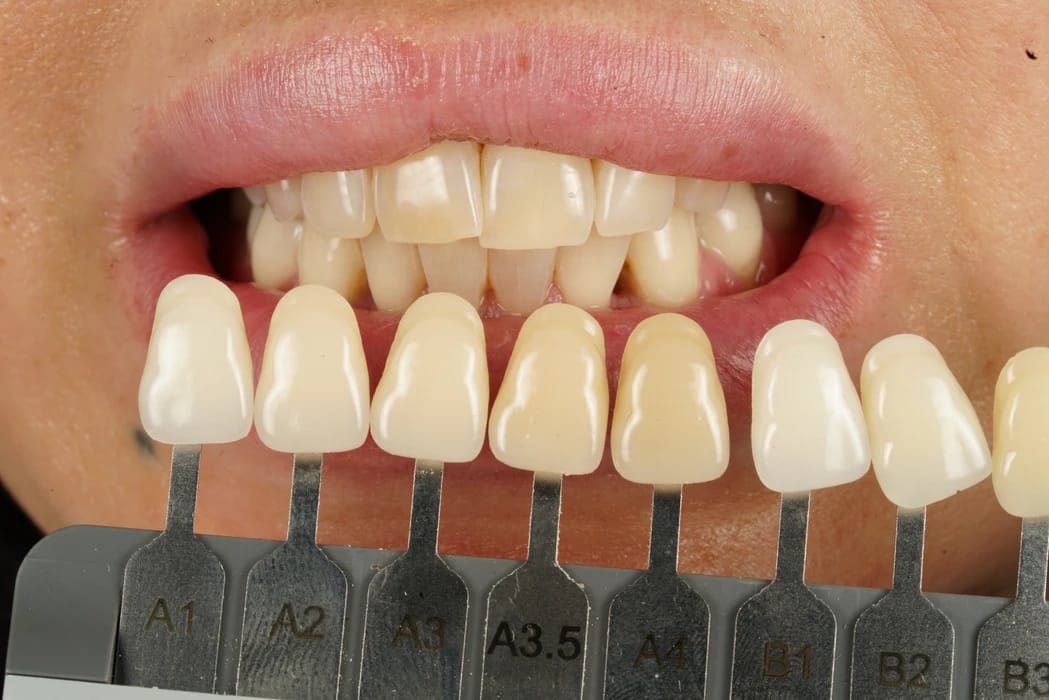
Modern Ivoclar IPS e.max ceramic comes in dozens of natural shades with translucency options. “Turkey teeth” typically use the brightest, most opaque shade regardless of the patient’s face or age. Result: teeth that don’t match anything on the person.
5. No occlusion planning
Cosmetic work must respect how your teeth actually bite together. Some Turkey teeth cases produce cosmetically striking but functionally broken bites — leading to chipping, TMJ pain, or grinding within the first year.
How to avoid becoming a Turkey teeth story
The framework is simple. Ask any Turkish clinic for these five things in writing before you book:
- Digital smile design preview — you see the proposed result before any tooth is prepared
- Specific material and shade selection — Ivoclar IPS e.max in a natural shade range, not the brightest opaque option
- Veneer preparation, not crown prep — unless you have specific structural reasons for a crown
- Full 5–7 day treatment window with try-in appointment — no 3-day rush jobs
- Occlusion (bite) planning and post-treatment night guard if indicated
For the full clinic verification framework, see our is dental tourism in Turkey safe guide. For the honest cost picture, see dental implants Turkey vs UK cost.
What proper Turkey dental work actually looks like
At Ulubey Dental in Antalya, the process for a full smile design is:
- Day 1: Consultation, high-resolution intraoral scan with the Dentsply Sirona Primescan, full-face photography, and digital smile design preview. You see the proposed result before any tooth is touched.
- Day 1 (afternoon) or Day 2: Tooth preparation — only after the design is agreed. For veneers, this is minimal enamel reduction, not full crown prep.
- Days 2–4: Ivoclar IPS e.max ceramics milled at our Amann Girrbach lab partner. Provisional veneers fitted.
- Day 5: Try-in of the permanent set — colour under different lighting, midline symmetry, shape review. Any adjustments go back to the lab.
- Day 6: Bonding of the permanent veneers, final occlusion balancing, polishing.
- Day 7: Final photograph, aftercare, night guard fitting if indicated.
Full Hollywood smile guide covers pricing (€250 per E.max veneer, €4,000–€5,000 for a full 16–20 veneer case) and the honest discussion of which patients actually need full veneer sets vs a smaller conservative plan.
Can Turkey teeth be corrected?
Sometimes, yes — but not always cheaply. The reality is:
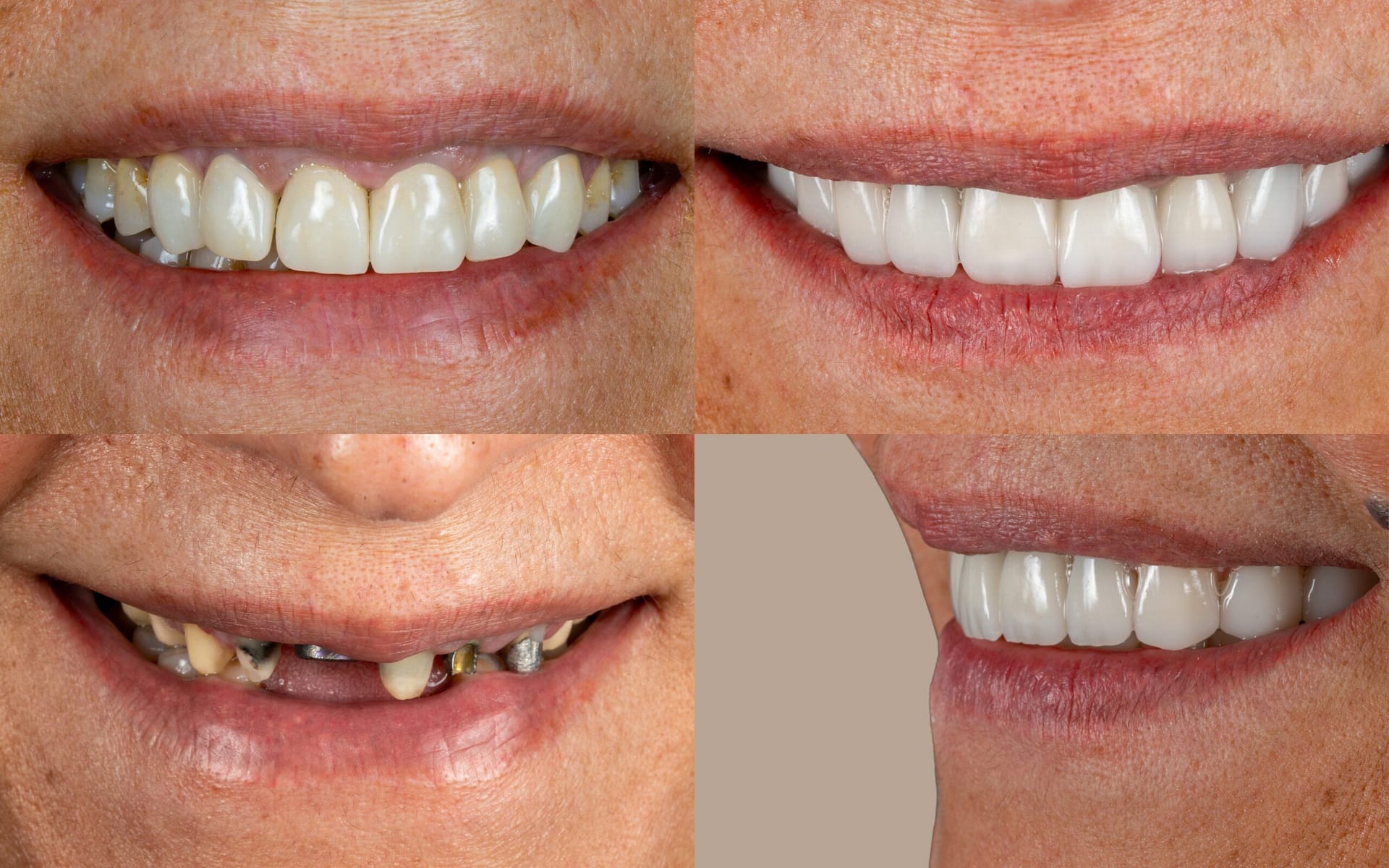
- If the underlying teeth were prepared for crowns (not veneers), those teeth will need crowns for the rest of their lives — there is no going back to natural enamel
- The colour and shape of aggressive crowns can be replaced with better-designed crowns, but the tooth structure that was removed cannot be restored
- If the crowns caused pulp damage or infection, root canal treatment may be required before revision
- For patients whose bite was compromised, orthodontic realignment or occlusal splints may be needed alongside cosmetic revision
Revision cases account for a growing portion of international patient visits to our clinic. We do this work — but the honest advice is: don’t need revision in the first place. Choose carefully, verify in writing, and refuse to be rushed.
Frequently Asked Questions
What are Turkey teeth?
“Turkey teeth” is a colloquial term for over-aggressive cosmetic dental work — usually full crowns on healthy teeth, over-white uniform shades, and rushed timelines — sometimes brought back from Turkish cosmetic tourism clinics. The term is unfair to Turkey as a whole; excellent dental work happens here daily. It refers to a style of over-treatment that can happen in any country.
Why do Turkey teeth get such a bad reputation?
Reality TV coverage and tabloid media amplified visible cases of aggressive crown work returning from Turkish cosmetic clinics from around 2021 onwards. The clinical concern is real — irreversible tooth reduction on healthy teeth for cosmetic reasons is not good dentistry — but the term unfairly generalises to the whole country.
How can I avoid getting Turkey teeth?
Ask any clinic for five things in writing before booking: digital smile design preview, specific material and shade selection (Ivoclar IPS e.max in natural shades), veneer preparation instead of crown prep where possible, a full 5–7 day treatment window with try-in appointment, and occlusion (bite) planning. Refuse to be rushed.
Are Turkey teeth safe?
The clinical safety of dental treatment in Turkey depends on the specific clinic, not the country. What matters is verifiable: a Ministry of Health licence, registered dentists, internationally recognised implant brands and materials, and written aftercare terms. “Turkey teeth” cases are usually clinically unsafe (over-prepared teeth are at risk of pulp damage and long-term complications), but that reflects clinic selection, not Turkey itself.
Can Turkey teeth be fixed?
Partially. Bad crowns can be replaced with better-designed crowns, but tooth structure that was removed cannot be restored. If pulp damage occurred, root canal treatment may be needed. Revision is possible but not always cheap — the honest advice is to avoid needing revision in the first place.
How much does proper Turkey dental work cost?
At Ulubey Dental Antalya: Ivoclar IPS e.max veneer €250 per tooth; a 20-tooth e.max Hollywood smile from €5,000; zirconia crown €185 per tooth; single implant with crown €485–€1,185 depending on the implant brand. A published London fee list (Harley Street Dental Studio, accessed 3 October 2026) charges from £1,400 per porcelain veneer and £1,895 for an implant plus £1,895 for its crown. Full breakdown in our cost comparison guide.
What’s the difference between Turkey teeth and Hollywood smile?
A Hollywood smile is a legitimate cosmetic treatment done properly with digital smile design, veneer preparation, and natural shade selection. “Turkey teeth” is a slang term for Hollywood smile treatment done badly — with aggressive crown prep, over-bright shades, and rushed timelines. Same intended result; very different execution.
Want a smile design plan that isn’t a Turkey teeth story?
Send us photos of your teeth and a description of what you want. We’ll come back within 24 hours with an honest assessment — sometimes the answer is “you don’t need 16 veneers, 6 would do it,” sometimes it’s whitening first, sometimes it’s a full smile design plan. Whatever the answer, you’ll see the digital preview before any tooth is prepared.
Explore all treatments at Ulubey Dental to see how smile design fits alongside our full clinical scope.
- WhatsApp (English): +90 540 324 0004
- WhatsApp (Persian, Surur): +90 540 324 0004
- Email contact form
You’ll speak with a dentist — not a salesperson.
— Dr. Ali Cem Ulubey, Ulubey Dental Clinic, Antalya
💡 Skip ahead — try our calculator
Answer 5 questions, get a personalized 2026 Hollywood smile and veneers price range in 60 seconds. No email required.
This article discusses cosmetic dental treatment approaches and is for general patient education. It does not replace clinical assessment. Suitability for veneers, crowns, or revision work depends on individual oral health, existing tooth structure, and aesthetic goals — all of which require examination and digital scanning.
Editor contact: [email protected] · ulubeydental.com/contact-us