
Osseointegration Explained: The Biology of Successful Dental Implants
Osseointegration explained in one sentence: it’s the biological process by which your jawbone grows into direct contact with the titanium surface of a dental implant, creating a bond so strong that the implant becomes functionally part of your bone. This process is why dental implants work — and why they take about 3 months to heal (planned individually) before permanent restorations can be placed.
Understanding osseointegration matters because it explains everything about implant treatment: why you need two visits for full-arch cases, why the temporary bridge stays in place for months, why smoking dramatically reduces success rates, and why some implants fail while others last 30+ years. Written from the chair side, this article covers the biology, the timeline, what makes it succeed or fail, and how we optimize for it at our clinic in Antalya.
If you want the broader implant treatment picture, see our dental implants overview. For the specific timeline aspect, see our how long to stay in Antalya guide. This article is specifically about the biology. To see the trips and days for your own combination of treatments, use our dental treatment stay planner.
What is osseointegration? Osseointegration explained in simple terms
The word comes from Latin: osseo (bone) + integration (joining together). It describes what happens at the microscopic level between a titanium implant surface and living jawbone over a period of months.
Here’s what’s actually happening:
- Day 0 (surgery): Titanium implant is placed into a precisely prepared hole in the jawbone. There’s mechanical stability but no biological bond yet.
- Weeks 1-2: Blood clot forms around the implant surface. Immune cells clear debris.
- Weeks 2-6: New bone cells (osteoblasts) begin depositing bone matrix directly onto the titanium surface.
- Months 2-4: Woven bone (immature bone) gradually remodels into lamellar bone (mature, strong bone) around the implant.
- Around month 3: Fully integrated in a standard case. Bone-to-implant contact reaches 60-80% of the surface, providing enough strength to load with permanent restorations.
The result: your bone treats the titanium implant essentially like part of itself. When you bite, chew, or apply force, the load transfers from the implant through the bone the same way it does with natural teeth.
Osseointegration explained — the timeline that matters
Timeline (planned individually):
Lower jaw (mandible)
About 3 months for full osseointegration. The mandible has dense cortical bone with strong blood supply and lower loading forces from below. Bone remodeling happens faster here.
Upper jaw (maxilla)
About 3 months as standard as well. The maxilla has softer trabecular bone with lower density, so we check implant stability carefully before loading and adjust the timing individually.
Grafted bone or sinus lift areas
About 6 months on average. When bone is augmented via sinus lift or bone grafting, the graft material must first integrate before the implant can be placed (or before the implant that was placed simultaneously can be loaded).
Immediate loading vs delayed loading
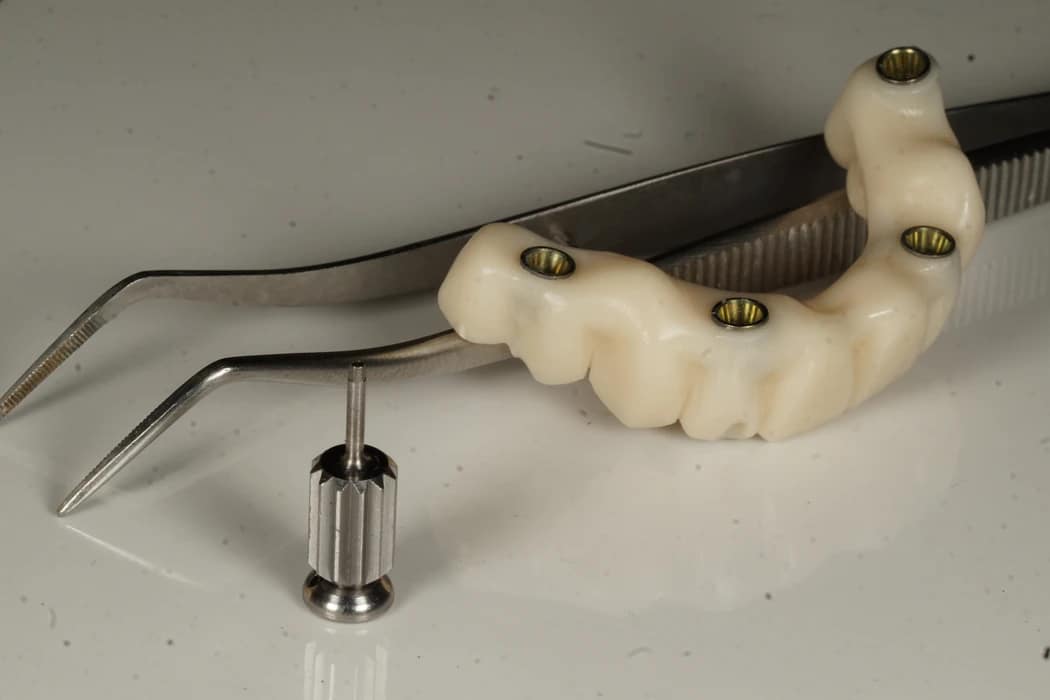
Some protocols involve fitting a temporary bridge on the same day as implant surgery (immediate loading). This works IF: primary stability is excellent, the implant design supports early loading, and the temporary is protected from excessive force. The bone still needs the same time, about 3 months, to fully osseointegrate — the temporary just doesn’t disturb it. This is exactly the approach we use in our All-on-4 and All-on-6 protocols at Ulubey Dental.
What determines osseointegration success?
Published pooled data put 10-year implant survival at about 96% (Howe et al., J Dent 2019; 95% CI 95.2–97.5%). Our clinic documents every implant placed since 2017 and every failure, and will publish its own counted figure once the count is complete. What makes the difference between the implants that integrate and the few that fail?
Factors WITHIN clinical control:
- Surgical precision — implant placement in prepared osteotomy with minimal thermal damage during drilling
- Primary stability — how tightly the implant grips bone immediately after placement (Insertion Torque Value ≥ 35 Ncm typical target)
- Implant surface treatment — modern hydrophilic surfaces (like Nucleoss‘s SLActive-style treatment) promote faster bone attachment
- Bone quality assessment — CBCT scan reveals bone density before surgery; softer bone needs different technique
- Sterile protocol — infection is the primary early failure cause
- Loading protocol — knowing when to load, how to distribute forces
Factors WITHIN patient control:
- Smoking — smokers have 2-3x higher implant failure rates. Nicotine reduces blood flow, impairing bone healing.
- Oral hygiene — inflammation around the implant (peri-implantitis) can compromise osseointegration even years later
- Diabetes control — uncontrolled diabetes impairs healing; well-controlled diabetes has no additional risk
- Bisphosphonate medication — some osteoporosis medications affect bone remodeling; must be assessed
- Post-operative behavior — following aftercare (no forceful chewing on surgical sites, no straws for first days, no smoking)
Factors NOT within control:
- Individual healing biology — some patients heal faster than others, natural variation exists
- Genetic factors — bone metabolism has genetic components
Signs of successful osseointegration
How do you know it’s working during the healing months?
- No pain at the implant site after initial healing (2 weeks)
- Firm feel — implant doesn’t move when gently tested by dentist
- No swelling or redness of the gums around the implant
- No taste or smell issues from the site
- Stable temporary bridge — screw-retained temporary shouldn’t loosen
At the final restoration visit, we test each implant with a resonance frequency analyzer (RFA) that measures how firmly integrated the implant is. This provides objective confirmation before loading with the permanent bridge.
What can prevent successful osseointegration?
The main risk factors and how they affect the process:
1. Infection (peri-implantitis)
Bacteria entering the surgical site during healing can prevent bone from attaching to the implant. Managed with strict sterile protocol during surgery, prescribed antibiotics, antimicrobial mouthwash, and patient hygiene.
2. Excessive early loading
Chewing hard foods on an implant during the first weeks can create micro-movement between bone and titanium, preventing attachment. This is why we use a soft-to-medium diet protocol for the first 4-6 weeks.
3. Smoking
Nicotine constricts blood vessels and reduces oxygen delivery to healing bone. Smokers have measurably lower success rates. If you can’t quit entirely, cut down as much as possible — every reduction helps.
4. Poor bone quality
If bone density is very low, the implant may not achieve initial stability. This is assessed pre-operatively via CBCT scan. Solutions include bone augmentation, different implant selection, or the All-on-4 protocol that engages denser anterior bone.
5. Thermal damage during surgery
If drilling generates too much heat, bone cells at the interface die. Modern surgical protocols use saline irrigation, correct drill speeds, and progressive drill sizes to prevent this. Not a risk with proper technique.
6. Systemic health issues
Uncontrolled diabetes, active cancer treatment, certain autoimmune conditions, and specific medications can affect bone healing. Full medical history is essential before surgery.
How Ulubey Dental optimizes for osseointegration
Every step of our protocol is designed to maximize osseointegration success:
Digital surgical planning
CBCT scan analyzed with implant planning software before surgery. Optimal implant position calculated based on bone volume, sinus location, nerve position, and prosthetic considerations. No guesswork.
Surface technology selection
We match the implant surface to the case. Softer bone benefits from hydrophilic surfaces (Nucleoss, some Straumann lines) that promote faster attachment. Denser bone works with standard surfaces at lower cost. See our 8 implant brands guide for details.
Surgical technique
Progressive drilling with saline irrigation. Precise osteotomy preparation. Insertion Torque Value measurement to confirm primary stability. Guided surgery when indicated.
Immediate loading protocol (when indicated)
For All-on-4 and All-on-6 cases with excellent primary stability, we fit a screw-retained temporary bridge on the surgical day. This is protective, not premature loading. The bone still integrates over about 3 months while the temporary bridge distributes forces appropriately.
Post-operative monitoring
Remote WhatsApp check-ins at 30, 90, and 365 days. Any concerns are addressed immediately. Detailed aftercare in writing before you leave Antalya.
Two-visit protocol
Rather than promising “permanent teeth in 10 days” like some clinics do, we honor the biology. Visit 1 for surgery and temporary bridge. Then about 3 months at home for full osseointegration. Visit 2 for the permanent zirconia bridge. See our how long to stay guide for the full timeline.
What if osseointegration fails?
Early failure (before 12 months): 3-5% of implants. Signs include implant mobility, persistent pain, gum inflammation. Treatment: implant removal, healing period, replacement — usually successful on second attempt.
Late failure (after 12 months): typically due to peri-implantitis from poor hygiene, or excessive loading forces. Manageable with intervention if caught early.
Our approach: written warranty terms clearly state what’s covered. Failed implants during the warranty period are replaced without additional clinical charge. Details provided before treatment begins.
Frequently Asked Questions
What does osseointegration mean in simple terms?
Osseointegration is the biological process where your jawbone grows directly into contact with the titanium surface of a dental implant, creating a strong bond that makes the implant functionally part of your bone. This process takes about 3 months and is what makes dental implants work as tooth replacements.
How long does osseointegration take?
About 3 months as standard, planned individually; about 6 months on average for grafted areas or after an open sinus lift. Immediate loading protocols don’t shorten this — they just allow a temporary bridge during the healing period.
What is the success rate of osseointegration?
Published pooled data put 10-year implant survival at about 96% (Howe et al., J Dent 2019). The failures that do occur are usually linked to infection, smoking, poor bone quality or premature loading. Our clinic records every implant and every failure; a counted clinic figure will be published once the count is complete. Careful case selection and surgical technique maximize success.
Can you speed up osseointegration?
Not really. The biology has its own timeline. What we can do is optimize conditions: modern implant surfaces (hydrophilic surface treatments like Nucleoss’s promote faster attachment), excellent surgical technique, good oral hygiene, no smoking, following aftercare. But compressing about 3 months into 1 month isn’t biologically possible.
How do I know if osseointegration is working?
Good signs during healing: no pain after initial 2 weeks, no swelling, temporary bridge stays stable, no unusual sensations. At the final restoration visit we test each implant with resonance frequency analysis to objectively confirm integration before loading permanent restorations.
Does smoking affect osseointegration?
Significantly. Smokers have 2-3x higher implant failure rates. Nicotine reduces blood flow to healing bone. If you can’t quit entirely, cutting down as much as possible improves outcomes. Some clinics won’t place implants in heavy smokers due to failure risk.
Does the upper jaw heal differently from the lower?
The mandible (lower jaw) has denser cortical bone with stronger blood supply. The maxilla (upper jaw) has softer trabecular bone. Bone remodeling and integration simply happens faster in denser bone with better blood supply. This is one reason healing time is planned individually; our standard is about 3 months.
Can I fly during the osseointegration period?
Yes. Cabin pressure at commercial flight altitudes doesn’t affect osseointegration once initial post-op healing is complete (usually a few days after surgery). See our flying after dental implants guide for detailed timing by procedure.
Have questions about your specific case?
Osseointegration success depends on individual factors — your bone quality, general health, hygiene, smoking status, and surgical technique. If you have concerns about whether implants will work for your case, send us your CBCT scan or panoramic X-ray. Within 24 hours you’ll have a specific assessment of implant suitability and expected osseointegration timeline.
Explore all treatments at Ulubey Dental Antalya to see how implant care fits into our broader clinical scope.
- WhatsApp (English): +90 540 324 0004
- WhatsApp (Persian, Surur): +90 540 324 0004
- Email contact form
You’ll speak with a dentist — not a salesperson.
— Dr. Ali Cem Ulubey, Ulubey Dental Clinic, Antalya
💡 Skip ahead — try our calculator
Answer 5 questions, get a personalized 2026 full mouth implants price range in 60 seconds. No email required.
This article explains the biological process of osseointegration for general patient education. Individual healing rates and success factors vary. Implant treatment planning requires clinical assessment including CBCT imaging. References: Brånemark original osseointegration research; ITI (International Team for Implantology) clinical documentation; peer-reviewed dental implant longevity studies.
Editor contact: [email protected] · ulubeydental.com/contact-us