Do Veneers Damage Your Teeth? Enamel, Prep and No-Prep
This page is general information and does not replace an examination.
Porcelain veneers need a small amount of enamel removed, and that cannot be undone, but they remove far less tooth than crowns: about 3–30% of the tooth’s crown in a laboratory study, against 63–72% for crowns. The real harm comes from going too deep: veneers bonded to dentin failed about 10 times more often than veneers bonded to enamel. At Ulubey Dental Clinic in Antalya we keep as much enamel as the plan allows and do not reshape healthy enamel for cosmetic reasons.
- 1. Do veneers ruin your teeth?
- 2. How much tooth is removed for a veneer
- 3. Why staying in enamel matters
- 4. Prep, minimal-prep and no-prep veneers
- 5. Where the real damage happens
- 6. Other risks to know about
- 7. How we protect your enamel
- 8. Prices and guarantee
- 9. Frequently asked questions
- 10. Sources
Do veneers ruin your teeth?
Do veneers damage your teeth? Well-planned veneers remove a little enamel and leave the tooth healthy underneath; badly planned veneers can remove too much. Both statements are true, and the difference lies in the plan.
The honest facts first. To place a porcelain veneer, the dentist removes a small amount of enamel from the front and sides of the tooth, and the treatment is not reversible[1]. Enamel contains no living cells, so it cannot repair damage from decay or wear[3], and what is removed does not grow back. That is why the ADA advises seeing a licensed dentist for veneers[1].
Seen next to the alternatives, a veneer is a conservative restoration. In a laboratory study, preparing a front tooth for a porcelain veneer removed about 3% to 30% of the tooth’s crown by weight, against about 63% to 72% for an all-ceramic or metal-ceramic crown[4]. Put simply, veneer preparations needed about one-quarter to one-half the tooth reduction of a full crown[4].
How much tooth is removed for a veneer
There is no single number that fits every tooth. The amount depends on:
- The goal. Where material only needs to be added, for example to close a gap or reshape a small tooth, a veneer can sometimes be placed without preparation[8]; where the new surface has to sit further back than the tooth does today, room has to be made.
- The material. Composite veneers may need less enamel removed than porcelain veneers[1].
- The enamel you have. Researchers who measured enamel thickness on 114 extracted front teeth, at the gum, the middle and the edge, noted that a veneer preparation should give the ceramic enough room while avoiding exposure of dentin, because resin bonds better to enamel than to dentin[6].
Because the amount follows the design, the design comes first. In our clinic a digital smile design preview and a tooth-coloured mock-up of the planned shape, placed over your own teeth without drilling, come before any tooth is prepared; you approve the shape before we touch the enamel. Both are included in the price of cosmetic treatment plans. Our guide to smile design explains the preview.
Why staying in enamel matters
Veneers rely on bonding, and bonding to enamel is more predictable than bonding to dentin. A retrospective study of 580 porcelain veneers in 66 patients followed for up to 12 years showed it clearly[5]:
| Preparation | Survival | Failure risk |
|---|---|---|
| Confined to enamel | 99% | Reference |
| Enamel only at the margins | 94% | Higher |
| Bonded to dentin, or margins in dentin | Lower | About 10 times higher than veneers bonded to enamel |
Source: Gurel et al. 2013. Overall cumulative survival in the study was 86%; the most frequent failure was fracture.
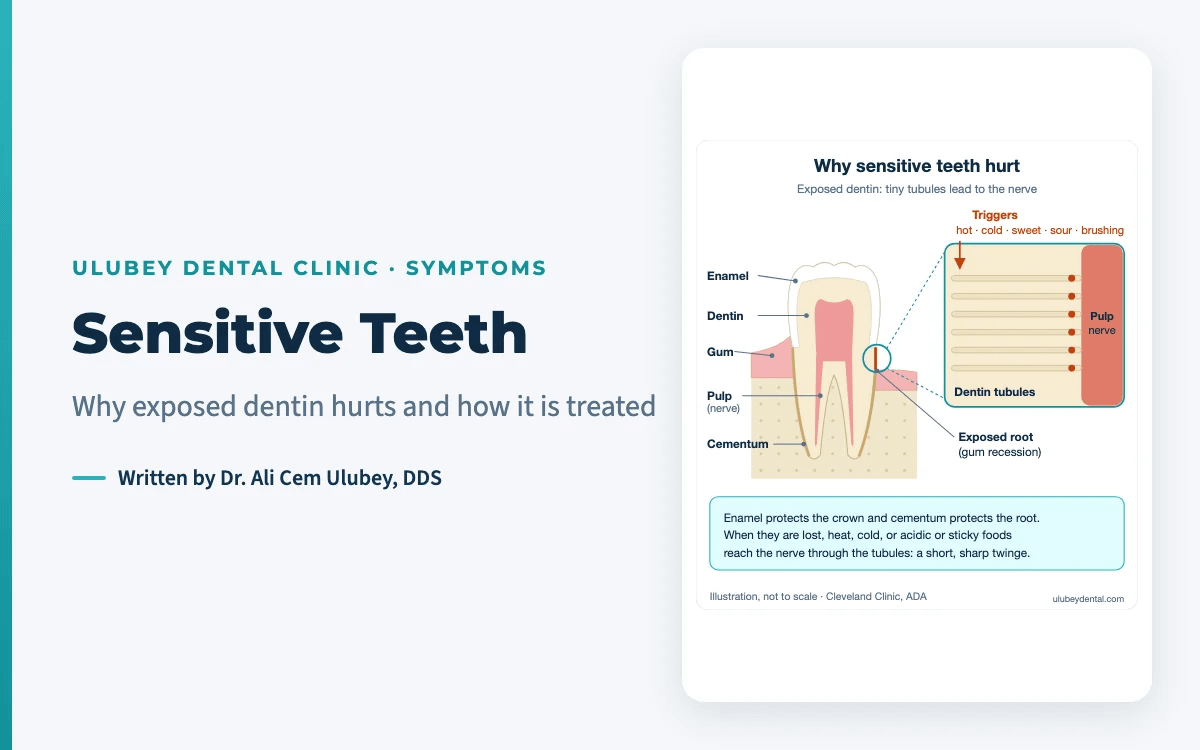
Dentin also has small tubules that pass heat, cold and acid to the nerve; when it loses its enamel cover, teeth can become sensitive[3]. Keeping the preparation in enamel therefore protects both the bond and the comfort of the tooth.
Prep, minimal-prep and no-prep veneers
| Type | Enamel removed | Reversible? | What studies show | May suit |
|---|---|---|---|---|
| Conventional porcelain veneer | A small amount from the front and sides | No[1] | Lithium disilicate veneers: 96.81% survival at about 10 years in a 2025 meta-analysis[10] | Changes in colour, shape or position that need room for the ceramic |
| Minimal-prep porcelain veneer | Less, kept in enamel where possible | No | Preparations kept in enamel: 99% survival up to 12 years[5] | Moderate changes on teeth with enough enamel |
| No-prep porcelain veneer | None or almost none | No tooth is removed, so the tooth is preserved | Small 2025 review (4 studies, 612 no-prep and conventional veneers): survival 91–100% overall, mean 97% for no-prep and 92% for conventional; marginal chipping and debonding were the main no-prep problems[7] | Small teeth, gaps or teeth that sit back, where material can be added |
| No-prep composite veneer | None | Described as reversible[8] | 91.3% survival at 7 years in 80 indirect composite veneers[8] | Gaps and shape changes; easier to repair, less stain-resistant[1] |
No-prep is not right for every tooth: without any preparation, a veneer adds thickness and can look bulky (overcontoured) when the tooth has no room for it.
The no-prep evidence is still thin: the 2025 review found only 4 eligible studies[7], so it should be read as encouraging rather than settled. The researchers who measured enamel thickness made the opposite point too: some reduction is often what prevents an overcontoured restoration[6]. The choice is a trade-off between the result you want and the enamel you keep, and it should be made on your own teeth, not from a brochure.
If your goal can be reached by adding material without any preparation, composite bonding may be the more conservative route; see composite bonding. Removable “clip-on” veneers are a different product again; our page on clip-on veneers explains the risks.
Where the real damage happens
Most stories of ruined teeth after treatment abroad are not about veneers at all. When teeth are cut down for full crowns but the result is sold as “veneers”, about two-thirds of the tooth’s crown can be removed[4], sometimes on healthy teeth that did not need it. Our article on Turkey teeth: the honest truth explains how this happens and how to check a plan before you travel; if you already have problems, see Turkey teeth gone wrong.
Is this a veneer or a crown, tooth by tooth? Will the preparation stay in enamel? Can I see the design or a mock-up first? Is composite bonding an option for any of these teeth? Ask for the answers in your written plan.
Other risks to know about
- Chipping, cracking, wear or loosening. A veneer may chip, crack, wear down or loosen over time, and then the dentist re-bonds, repairs or replaces it[1]. Small chips may be repaired[2].
- Grinding. If you clench or grind your teeth, or have a deep overbite, veneers may not be a good choice[1]. In a 20-year study, existing grinding was linked to a 7.7 times greater risk of veneer failure, and teeth without a living nerve also failed more often[9]. See crowns and veneers when you grind.
- Stains on composite. Composite veneers are easier to fix but less resistant to stains and wear than porcelain[1].
- Whitening does not change veneers. If you want whiter natural teeth, the timing matters; see whitening, repairing or removing veneers.
How we protect your enamel
Ulubey Dental Clinic is run by two dentists, Dr. Ali Cem Ulubey and Dr. Surur Ulubey; the dentist who plans your veneers is the one who prepares and fits them. Our approach:
- Examination first: a panoramic X-ray for every patient; decay and gum problems are treated before any veneer.
- Design before preparation: a digital smile design preview and a mock-up on your own teeth, included in cosmetic treatment plans; you approve the shape first.
- Minimal preparation: we keep as much enamel as the plan allows, and we consider bonding when it can reach the goal.
- No cosmetic enamel reshaping: we do not file down healthy enamel to change the shape of a tooth. If the edge of a tooth is chipped or broken, we polish it or add a small composite to the broken part, as the case requires.
- Bonding protocol: rubber dam isolation and adhesive bonding; our veneer cementation protocol explains each step.
- Protection afterwards: a custom night guard is included with veneers for patients who grind.
Prices and guarantee
| Veneer | Material | Price |
|---|---|---|
| E.max laminate veneer | Ivoclar IPS e.max | €250 |
| Zirconia veneer | Amann Girrbach zirconia | €185 |
| Composite veneer | Composite resin | €120 |
| Smile makeover, 10 teeth | Zirconia | from €1,850 |
| Smile makeover, 10 teeth | E.max | from €2,500 |
Ulubey Dental Clinic, October 2026; prices as listed on our dental treatment prices page.
Included: the temporaries and try-ins during your visit, the digital smile design preview and a custom night guard with veneers. Removing an old veneer is €35 per tooth and is included when a new veneer or crown is placed on the same tooth. Prices are indicative; your final written quote follows the examination and X-rays and is valid for 30 days. Unless the treatment plan changes, the written price does not change.
Guarantee: 5-year guarantee on E.max veneers against fracture or debonding (excluding trauma, and bruxism without the night guard we provide); zirconia veneers carry the same 5-year clinic guarantee, not the 10-year Amann Girrbach guarantee, which applies to zirconia crowns and bridges. All guarantees are conditional on attending recommended check-ups. Full terms are in our written dental guarantee; the veneers page and the veneers cost calculator help you plan the number of teeth and the budget.
Frequently asked questions
Do veneers ruin your natural teeth?
Not when they are planned conservatively. Porcelain veneers need a small amount of enamel removed, which does not grow back, so the treatment is not reversible. But in a laboratory study veneer preparations removed about 3–30% of the tooth’s crown, against about 63–72% for crowns. Damage happens when preparation goes too deep or when teeth are cut down for crowns sold as veneers.
How much enamel is removed for veneers?
It depends on the goal, the position of the tooth and the material, so there is no single number for every tooth. Composite veneers may need less enamel removed than porcelain, and some cases need little or no preparation. What matters is that the preparation stays in enamel: veneers bonded to enamel had 99% survival in one study, while veneers bonded to dentin failed about 10 times more often.
Are no-prep veneers better for your teeth?
They keep more enamel, but they are not right for every tooth. Without preparation a veneer adds thickness and can look bulky if the tooth has no room for it. A small 2025 review of 4 studies reported survival of 91–100% across no-prep and conventional veneers (mean 97% for no-prep), with chipping and debonding as the main no-prep problems; the evidence is still limited. Your dentist decides tooth by tooth whether material can be added without preparation.
Can you go back to natural teeth after veneers?
Not with prepared porcelain veneers: the enamel that was removed does not grow back, so a prepared tooth will normally need a new veneer or a crown if the veneer is removed. No-prep composite veneers are the exception, as no tooth is removed. This is why it is worth checking whether bonding can reach your goal before any tooth is prepared.
Do you file down teeth for veneers at Ulubey Dental?
We keep as much enamel as the plan allows and consider bonding when it can reach the goal. A digital smile design preview and a mock-up on your own teeth come before any preparation, and you approve the shape first. We do not reshape healthy enamel for cosmetic reasons; if a tooth edge is chipped, we polish it or add a small composite to the broken part.
Sources
- American Dental Association, MouthHealthy. Veneers (accessed 26 October 2026). www.mouthhealthy.org/all-topics-a-z/veneers
- Oral Health Foundation. Veneers (accessed 26 October 2026). www.dentalhealth.org/veneers
- American Dental Association, MouthHealthy. Tooth: the anatomy of a tooth (accessed 26 October 2026). www.mouthhealthy.org/all-topics-a-z/tooth
- Edelhoff D, Sorensen JA. Tooth structure removal associated with various preparation designs for anterior teeth. J Prosthet Dent. 2002;87(5):503-509. PMID 12070513. pubmed.ncbi.nlm.nih.gov/12070513
- Gurel G, Sesma N, Calamita MA, Coachman C, Morimoto S. Influence of enamel preservation on failure rates of porcelain laminate veneers. Int J Periodontics Restorative Dent. 2013;33(1):31-39. PMID 23342345. pubmed.ncbi.nlm.nih.gov/23342345
- Ferrari M, Patroni S, Balleri P. Measurement of enamel thickness in relation to reduction for etched laminate veneers. Int J Periodontics Restorative Dent. 1992;12(5):407-413. PMID 1343012. pubmed.ncbi.nlm.nih.gov/1343012
- Hameed FF, Rajendran MR, Kalaiselvam R, et al. Clinical outcomes of no-prep veneers and conventional veneers: a systematic review. J Contemp Dent Pract. 2025;26(12):1245-1251. PMID 42607000. pubmed.ncbi.nlm.nih.gov/42607000
- Kam Hepdeniz O, Temel UB. Clinical survival of no-prep indirect composite laminate veneers: a 7-year prospective case series study. BMC Oral Health. 2023;23(1):257. PMID 37138297. pubmed.ncbi.nlm.nih.gov/37138297
- Beier US, Kapferer I, Burtscher D, Dumfahrt H. Clinical performance of porcelain laminate veneers for up to 20 years. Int J Prosthodont. 2012;25(1):79-85. PMID 22259802. pubmed.ncbi.nlm.nih.gov/22259802
- Klein P, Spitznagel FA, Zembic A, et al. Survival and complication rates of feldspathic, leucite-reinforced, lithium disilicate and zirconia ceramic laminate veneers: a systematic review and meta-analysis. J Esthet Restor Dent. 2025;37(3):601-619. PMID 39523553. pubmed.ncbi.nlm.nih.gov/39523553
This article is general patient information and does not replace a clinical examination or X-rays.
Editor contact: [email protected] · ulubeydental.com/contact-us