Social-Media Teeth Trends: What a Dentist Wants You to Know
This page is general information and does not replace an examination.
Many viral teeth trends do more harm than good. Filing teeth at home removes enamel, and teeth have almost no ability to regenerate it[1]. Do-it-yourself whitening with strawberries and baking soda softened enamel in a laboratory study[2]; charcoal toothpaste has insufficient evidence for its safety and whitening claims[5]; and salon or online whitening kits may harm teeth and gums[4]. “Turkey teeth” usually means full crowns on healthy teeth: a crown preparation removes about 63–72% of the tooth’s crown, a veneer about 3–30%[10]. A dentist at Ulubey Dental Clinic, Antalya, explains each trend.
- 1. Why teeth trends spread so fast
- 2. Trend checker: what the evidence says
- 3. Filing your teeth at home
- 4. DIY whitening: lemon, baking soda, strawberries
- 5. Charcoal toothpaste and powders
- 6. Gap bands and DIY braces
- 7. Oil pulling
- 8. “Turkey teeth”: what the trend shows
- 9. How to check a teeth trend before you try it
- 10. What we tell patients who ask about trends
- 11. Frequently asked questions
- 12. Sources
Why teeth trends spread so fast
Short videos reward fast, visible results, and teeth are easy to film. The quality of the information varies widely. A 2026 study of 500 popular Turkish-language Instagram posts on tooth whitening found that 75.8% came from dentist or clinic accounts and were mostly marketing-oriented, while independent users reached larger raw audiences with mostly do-it-yourself content that had among the lowest reliability scores[11].
This page goes through the trends patients most often ask us about. It is general information; it does not recommend any product, and the right choice for your teeth depends on an examination.
Trend checker: what the evidence says
| Trend | What it claims | What the evidence says | A dentist’s view |
|---|---|---|---|
| Filing teeth with a nail file | Evens out uneven edges at home | Enamel has almost no ability to regenerate[1] | Avoid: the loss is permanent |
| Lemon, vinegar, strawberries and baking soda | Natural whitening | A strawberry and baking soda mix reduced enamel hardness in a lab study[2]; avoid products with citric acid[3] | Avoid |
| Charcoal toothpaste and powders | Whitening, detox, antibacterial | Insufficient clinical and laboratory data; 3 studies reported harmful outcomes[5] | Avoid until better evidence exists |
| Salon or online whitening kits | Whitening at a lower cost | May not work as well and may harm teeth and gums (NHS)[4] | Have whitening checked and supervised by a dentist |
| Gap bands and DIY braces | Close gaps or straighten teeth at home | Subject of an orthodontic consumer alert[7]; DIY brace websites scored poor or very poor for information quality[8] | Avoid; see a dentist or orthodontist |
| Oil pulling | Cleaner teeth and healthier gums | Possible benefit for gum health, very low certainty; chlorhexidine was better for plaque[9] | At most an extra; not a replacement for brushing |
| “Turkey teeth” style full crowns | Fast, very white, even smile | Crown preparation removes about 63–72% of the tooth’s crown[10] | Healthy teeth should not be crowned for looks alone |
Sources as cited per cell. Based on published studies and official guidance; not a recommendation for or against any brand.
Filing your teeth at home
Videos of people evening out their front teeth with a nail file spread widely. Enamel is the hard outer layer of the tooth, and it is produced only while the tooth is forming. A review of tooth repair explains that human teeth have very low to almost absent regeneration potential, because the cells able to regenerate them are lost early[1]. Whatever is filed away does not grow back, and the softer dentin underneath is closer to the surface.
Uneven edges can also come from the position of the teeth, from grinding or from wear; our guides to teeth grinding and tooth wear and enamel erosion explain those causes. At our clinic we do not reshape healthy teeth for cosmetic reasons. If an edge is chipped or broken, we polish it or add a small composite to the broken part, as the case requires.
DIY whitening: lemon, baking soda, strawberries
Kitchen whitening recipes look harmless, but several rely on acid or abrasion. In a laboratory study on enamel samples, a do-it-yourself strawberry and baking soda mix significantly reduced enamel hardness, while the professional methods tested did not[2]. Cleveland Clinic advises avoiding whitening products that contain citric acid or activated charcoal, and waiting about an hour before brushing after acidic food or drinks[3].
Shop-bought and salon whitening is a separate question. The NHS says that whitening from beauty salons, or with a kit bought from a pharmacy or online, does not work as well and may harm your teeth and gums, and that a kit from a dentist or whitening at a dental surgery is the safest way; it is not done for people aged 17 or younger, and it only lightens natural teeth, not crowns, dentures or implants[4]. Our guide to yellow and stained teeth explains which stains respond to whitening, and our teeth whitening page explains professional whitening.
Charcoal toothpaste and powders
A literature review in the Journal of the American Dental Association screened 118 articles on charcoal for tooth brushing; none met its inclusion criteria for good-quality trials. Three studies reported harmful outcomes such as more decay or enamel abrasion, and online advertisements made unsubstantiated claims such as antibacterial, antifungal and “detox” effects. The authors found insufficient data to support the safety and efficacy claims, and advised dentists to tell patients to be cautious[5].
A later review in the British Dental Journal noted that charcoal toothpastes are fashionable in many countries and that much of the advice given about them is empirical[6]. A normal fluoride toothpaste and a professional cleaning remain the evidence-based way to keep surface stains down; our daily oral care guide explains the routine.
Gap bands and DIY braces
Elastic bands sold online to close gaps between teeth led the American Journal of Orthodontics and Dentofacial Orthopedics to publish a consumer alert on “gap bands”[7]. Do-it-yourself aligners sold by post are a related trend: a 2022 study found 7 such companies operating in the UK, with limited information about the involvement of a dental professional and website information scored as poor or very poor[8].
A gap between the teeth can have several causes, including gum disease, which home bands cannot detect. Our guide to the gap between teeth explains causes and the ways a dentist closes a gap.
Oil pulling
Oil pulling means swishing an edible oil around the mouth for several minutes. A 2024 systematic review of 25 trials found a probable benefit for gum health compared with non-chlorhexidine mouthwashes, but chlorhexidine was better at reducing plaque, and the overall certainty of the evidence was very low[9]. The trials studied it as an addition, not as a replacement for brushing with fluoride toothpaste, and they did not test it as a whitening method.
“Turkey teeth”: what the trend shows
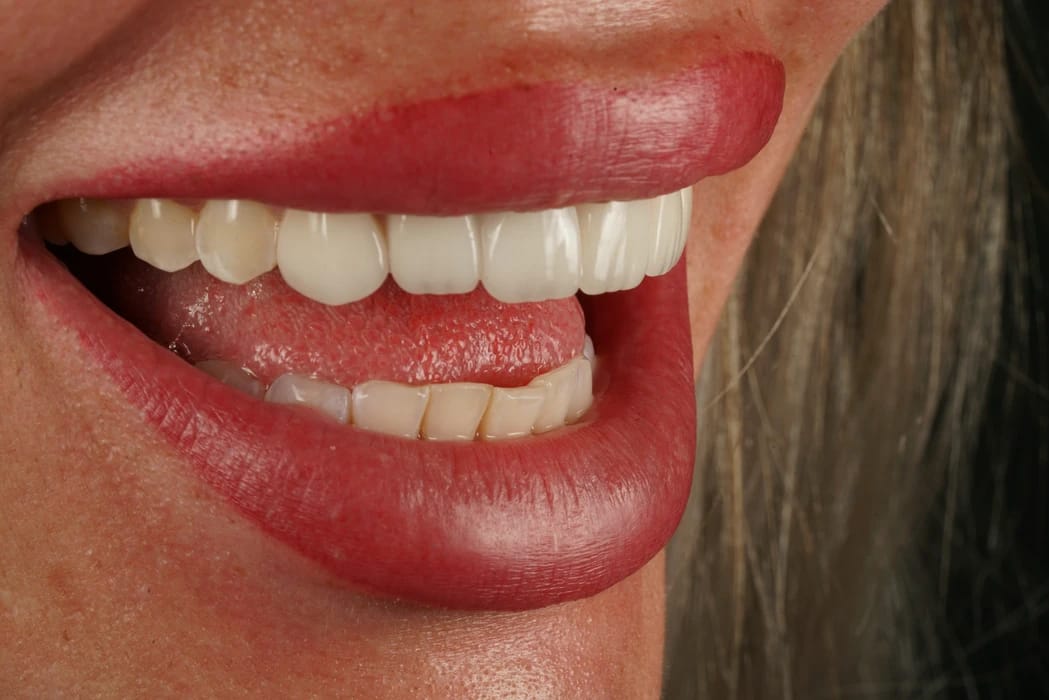
“Turkey teeth” is UK slang for very white, uniform smiles made with full crowns on healthy teeth, usually on a short trip abroad. The problem is the preparation, not the country. In a laboratory study, a crown preparation removed about 63–72% of the tooth’s crown, while veneer preparations removed about 3–30%[10]. The same over-treatment can happen anywhere.
The honest lessons from the trend are simple: healthy teeth should not be crowned for looks alone, a very white colour does not suit every face, and any plan should explain how much tooth is removed and why. Our guides “Turkey teeth”: the honest truth and Turkey teeth gone wrong cover the risks in detail, and our veneers page explains how veneers differ from crowns. Clip-on and press-on veneers, another online trend, are explained on our clip-on veneers page.
How to check a teeth trend before you try it
- Is it reversible? Anything that removes enamel (filing, acids, abrasive powders, unnecessary preparation) cannot be undone[1].
- Who is speaking? A registered dental professional, a brand, or someone selling a product? The NHS points UK patients to the General Dental Council register to check a dental professional[4].
- What is the evidence? Look for a named study or an official health source, not only before-and-after clips.
- What does it hide? A gap, a stain or an uneven edge can be a sign of gum disease, decay or grinding that a home method will not treat.
- Ask first. Show the video or a photo of your teeth to a dentist before you try anything that cannot be undone.
What we tell patients who ask about trends
Ulubey Dental Clinic is run by two dentists, Dr. Ali Cem Ulubey and Dr. Surur Ulubey; there are no rotating dentists. When patients show us a trend video, we:
- look for the cause of the problem the trend promises to fix, with an examination and a panoramic X-ray;
- start with the least invasive option: cleaning, whitening of natural teeth, bonding or orthodontics before preparation for veneers or crowns;
- do not reshape healthy teeth for cosmetic reasons, and we explain how much tooth each option removes before you decide;
- show the plan first: for veneers, you approve a digital smile preview before any tooth is prepared.
Prices for every treatment mentioned are on our dental treatment prices page.
Frequently asked questions
Is it safe to file my teeth with a nail file?
No. Filing removes enamel, the hard outer layer of the tooth, and human teeth have almost no ability to regenerate it, so the loss is permanent and the softer dentin moves closer to the surface. Uneven edges can come from tooth position, grinding or wear, which filing does not fix. If an edge is chipped, a dentist can polish it or add a small composite.
Do lemon, baking soda or strawberries whiten teeth?
They are not a safe way to whiten. In a laboratory study, a do-it-yourself strawberry and baking soda mix significantly reduced enamel hardness, and Cleveland Clinic advises avoiding whitening products with citric acid. Acids soften enamel; after anything acidic, wait about an hour before brushing. Professional whitening checked by a dentist is the safer route for adults.
Is charcoal toothpaste safe for whitening?
The evidence is not there. A review in the Journal of the American Dental Association found insufficient clinical and laboratory data to support the safety and efficacy claims of charcoal toothpastes, three studies reported harmful outcomes such as enamel abrasion, and advertising claims were often unsubstantiated. A normal fluoride toothpaste and a professional cleaning are the evidence-based choice.
What are “Turkey teeth”?
“Turkey teeth” is UK slang for very white, uniform smiles made with full crowns on healthy teeth, often on a short trip abroad. The concern is the preparation: in a laboratory study a crown preparation removed about 63–72% of the tooth’s crown, a veneer about 3–30%. The same over-treatment can happen in any country; healthy teeth should not be crowned for looks alone.
Do gap bands work to close gaps between teeth?
They are not a safe home treatment. Elastic “gap bands” were the subject of a consumer alert in an orthodontic journal, and do-it-yourself brace websites in the UK scored poor or very poor for information quality. A gap can also be a sign of gum disease that home bands cannot detect. A dentist or orthodontist should find the cause first.
Does oil pulling clean or whiten teeth?
A 2024 systematic review of 25 trials found a possible benefit for gum health, but chlorhexidine mouthwash was better at reducing plaque and the certainty of the evidence was very low. The trials did not test oil pulling as a whitening method or as a replacement for brushing. It is at most an extra; brushing with fluoride toothpaste comes first.
Sources
- Balic A. Biology explaining tooth repair and regeneration: a mini-review. Gerontology. 2018;64(4):382-388. PMID 29533942. pubmed.ncbi.nlm.nih.gov/29533942
- Kwon SR, Kurti SR, Oyoyo U, Li Y. Effect of various tooth whitening modalities on microhardness, surface roughness and surface morphology of the enamel. Odontology. 2015;103(3):274-279. PMID 24972882. pubmed.ncbi.nlm.nih.gov/24972882
- Cleveland Clinic. Tooth discoloration (last updated 3 July 2025; accessed 26 October 2026). my.clevelandclinic.org/health/symptoms/10958-tooth-discoloration
- NHS. Teeth whitening (page last reviewed 19 August 2025; accessed 26 October 2026). www.nhs.uk/tests-and-treatments/teeth-whitening
- Brooks JK, Bashirelahi N, Reynolds MA. Charcoal and charcoal-based dentifrices: a literature review. J Am Dent Assoc. 2017;148(9):661-670. PMID 28599961. pubmed.ncbi.nlm.nih.gov/28599961
- Greenwall LH, Greenwall-Cohen J, Wilson NHF. Charcoal-containing dentifrices. Br Dent J. 2019;226(9):697-700. PMID 31076703. pubmed.ncbi.nlm.nih.gov/31076703
- Behrents RG. Consumer alert on the use of elastics as “gap bands”. Am J Orthod Dentofacial Orthop. 2014;146(3):271-272. PMID 25172244. pubmed.ncbi.nlm.nih.gov/25172244
- Carter A, Stokes S. Availability of ‘Do-It-Yourself’ orthodontics in the United Kingdom. J Orthod. 2022;49(1):83-88. PMID 34096369. pubmed.ncbi.nlm.nih.gov/34096369
- Jong FJX, Ooi J, Teoh SL. The effect of oil pulling in comparison with chlorhexidine and other mouthwash interventions in promoting oral health: a systematic review and meta-analysis. Int J Dent Hyg. 2024;22(1):78-94. PMID 37635453. pubmed.ncbi.nlm.nih.gov/37635453
- Edelhoff D, Sorensen JA. Tooth structure removal associated with various preparation designs for anterior teeth. J Prosthet Dent. 2002;87(5):503-509. PMID 12070513. pubmed.ncbi.nlm.nih.gov/12070513
- Yılmaz NA, Akkoçan BA, Akkoçan O, Ulucan SE. Information quality, content scope, and audience engagement of popular Turkish Instagram posts on tooth whitening: a cross-sectional content analysis. Healthcare (Basel). 2026;14(10):1376. PMID 42194468. pubmed.ncbi.nlm.nih.gov/42194468
This article is general patient information and does not replace a clinical examination or X-rays.
Editor contact: [email protected] · ulubeydental.com/contact-us